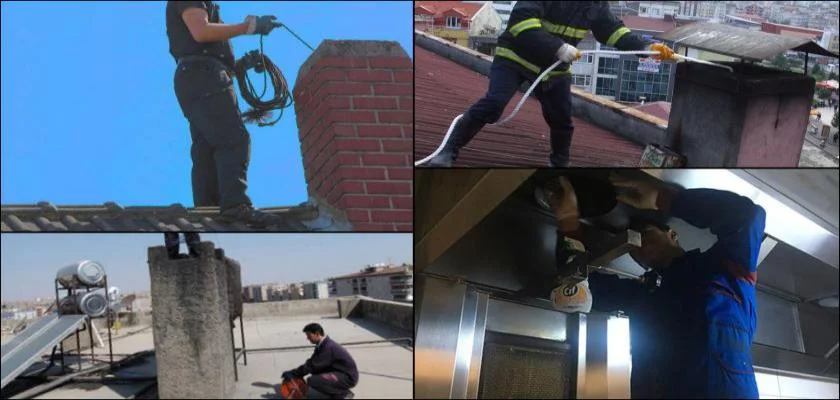
What is a Standard Chimney?
In living spaces, people need systems such as stoves, natural gas, etc. to meet their heating and hot water needs. Since these contain waste gases, it is essential that they are expelled through chimneys. The classification of chimneys is generally examined in 3 ways. These are standard chimneys, common shunt chimneys, and independent individual chimneys. All chimneys must be cleaned and special maintenance performed, and a chimney report must be obtained. This type of chimney generally rises as a single column from the ground to the roof and is designed to be used by more than one unit, and these are called standard chimneys. Gas-burning appliances cannot be connected to chimneys in this way, and obtaining a
chimney cleaning report is absolutely necessary.
What is a Common Shunt Chimney?
These are chimneys that rise from the ground to the roof and consist of branches belonging to each unit connected to them. Chimneys of this type rise as independent chimneys on the top floors, and the effective chimney height on these floors must be a minimum of 4m. At the same time, appliances with blown burners cannot be connected to these chimneys. If natural gas appliances are to be connected to shunt chimneys, solid or liquid-burning appliances cannot be connected to other units. If there are two apartments on each floor, and the flued appliances in the apartments are connected to the same chimney via a branch, it is called a double shunt chimney, and obtaining a chimney report for all these chimneys is absolutely necessary.