
WHAT IS HUMAN CLONING AND IS IT POSSIBLE?
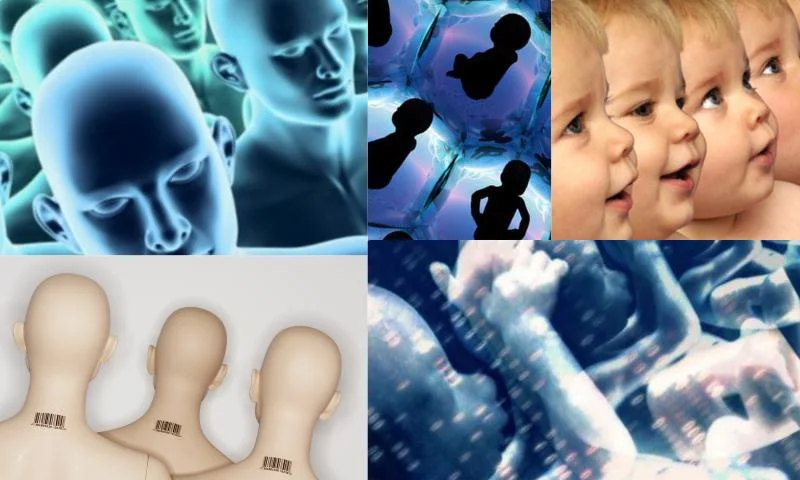
Cloning is a topic widely discussed as a new concept. Looking at the history of science, it is the study that has made the most noise. This study drew criticism because of the danger of human cloning, which is far beyond the cloning of a sheep. If cloning were to be carried out and human DNA could be copied, the resulting consequences would appear to be very dire. There would undoubtedly be great advancements in the field of health, but looking at other areas, there could also be negative outcomes. For example, imagine Adolf Hitler being cloned! What a catastrophe would await the world. Yes, we can say it is a great scientific advancement, but there are problems from religious, social, and societal perspectives. While some segments think cloning should be banned, others find it very entertaining. There are even those who suggest that at least a person could receive an organ from their clone when their heart fails. We can give identical twins as an example of natural human clones, but we also know that they are two different individuals. They are people with separate souls and preferences. Cloning speaks of a human profile where everything is identical.
HOW IS CLONING DONE?
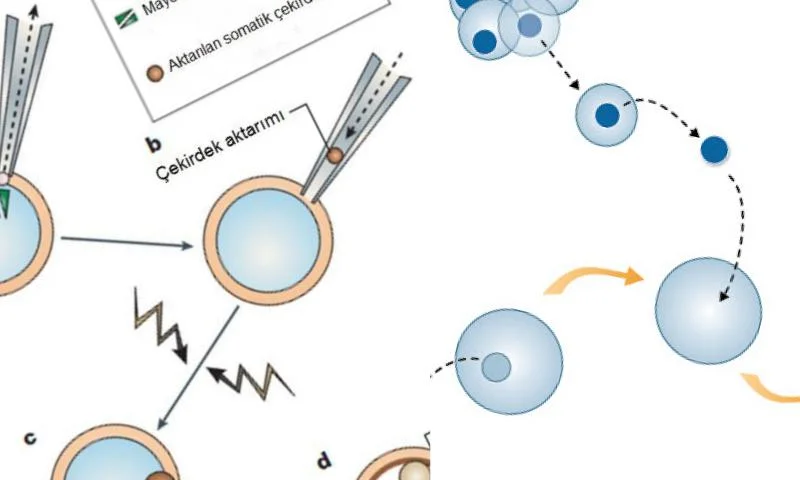
The nucleus is transferred elsewhere. The nucleus of a cell taken from a person is transferred to another egg cell, and if it can be sustained, the person is cloned. In a laboratory environment, the cell is multiplied by shock. Cloning is not a 100% successful process; the success rate in animals appears to be 3%. When Dolly, a very cute sheep, was first cloned in '97, it was a sensation. However, only 27 out of 277 cells taken from this sheep could develop. Of the nuclei placed into the ovaries of different sheep, 13 were successful. But it is difficult to say the same for humans. The process of multiplying human cells is more complex, and no company has succeeded in this multiplication. At least, that's what is told to the public. From a scientific perspective, if a cell nucleus is taken from a baby while still in the womb and developed in another egg, and if the baby later experiences fatal organ loss as it grows, the idea that organs like the heart, spleen, and kidneys could be taken from the clone for transplantation is a positive thought in the field of health. However, the religious aspect of this matter must also be considered. If both cloned beings are alive, which one will we consider the original? If the clone survives and the original becomes ill, will we then kill the original to save the clone? There are many questions to ponder. It seems that cloning will not see development this century. Both the studies are insufficient, and many countries have banned cloning. The answer to the question of whether cloning is permissible has not been clarified.