
Historic Turkish Baths: History, Architecture, and Cultural Significance
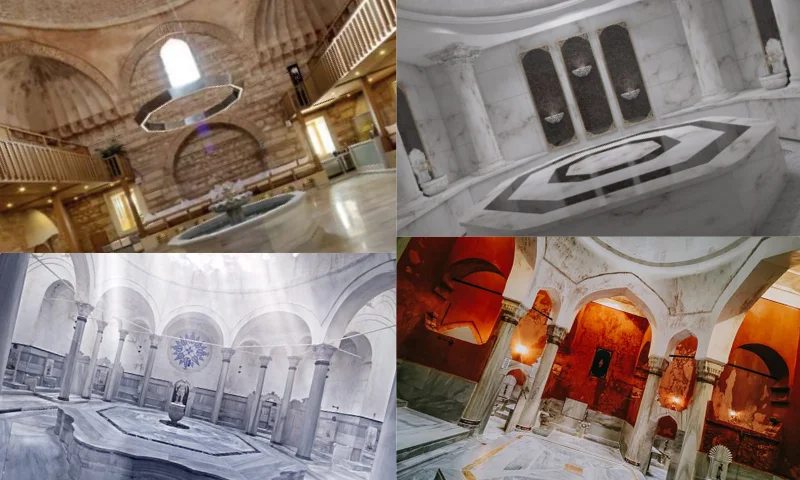
Turkish baths, or hamams, are facilities that people have used to meet their hygiene needs since ancient times. However, the history of hamams extends back to the Middle East and Anatolia. People in this region used hamams not only for hygiene but also for social interaction, relaxation, and health. Here is more information about the history, architecture, and cultural significance of historic hamams:
History
The origins of hamams can be traced back to ancient Roman baths. However, the history of hamams in Turkey goes back to the 7th century. At that time, Turks adopted the culture of hamams while leading a nomadic life in Central Asia and brought it to Anatolia. Later, during the Ottoman Empire period, the number of hamams increased, and their importance grew.
Architecture
The architecture of hamams saw significant development during the Ottoman Empire period. Traditional hamams consist of three sections: the warm room (ılıklık), the hot room (sıcaklık), and the cool room (soğukluk). One would first enter the warm room, then relax in the hot room, and finally undergo therapy in the cool room. The transitions between these sections are decorated with carefully designed stairs, domes, arches, and mosaics.
Cultural Significance
Hamams are an important part of Turkish culture. In the Ottoman Empire, hamams were the center of social life, where people met each other, chatted, and relaxed. Furthermore, hamams had health benefits. For this reason, hamams were also used as hospitals in the Ottoman Empire. Historic hamams are an important part of Turkish culture. Their architecture developed significantly during the Ottoman Empire period, and hamams hold an important place for people for social interaction, relaxation, and health.